Why NepalPick recommends it
Why Tsum Valley rewards curiosity
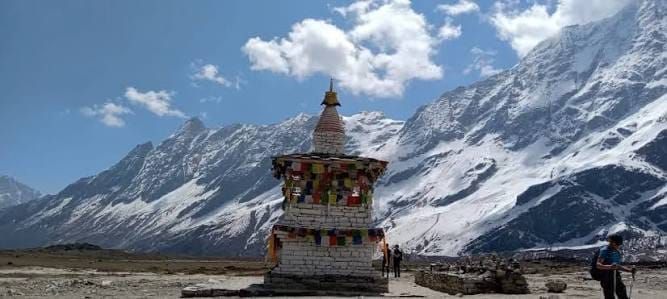
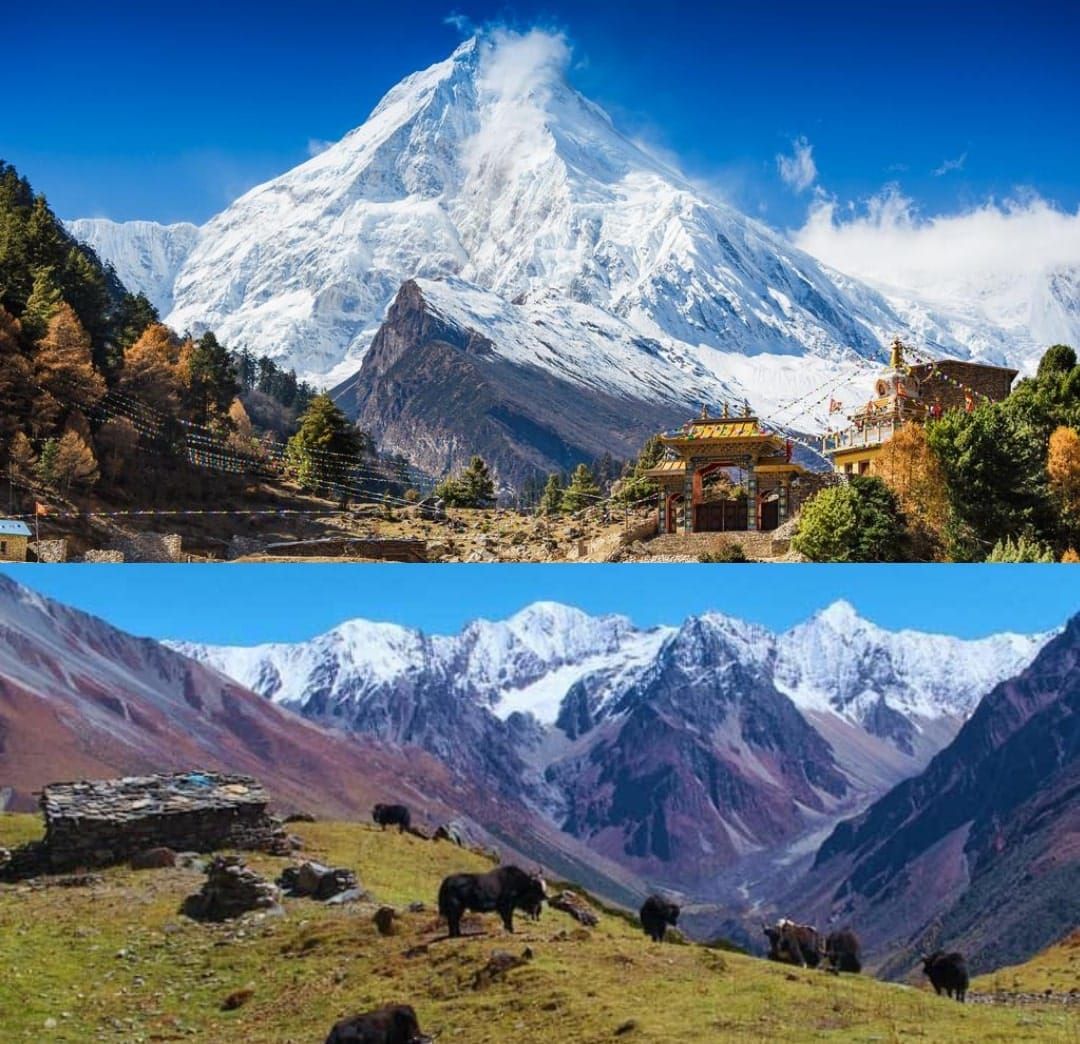
Travel through a culturally distinct Buddhist valley of monasteries, mani walls, farming settlements, and soaring cliffs north of the lower Manaslu trail.
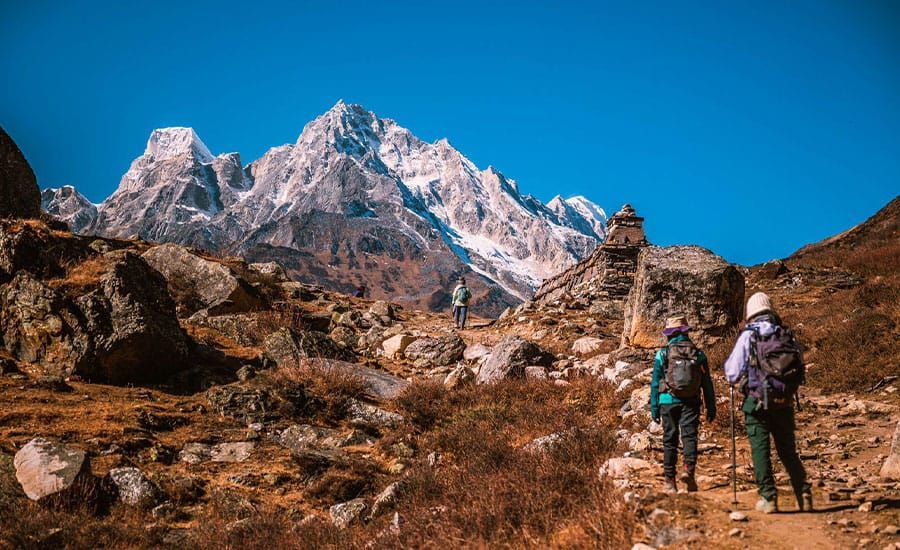
The journey offers space to notice how the landscape changes, eat what is seasonal, and let local knowledge shape the day. The point is not to collect sights. It is to understand why this place feels different from Nepal’s familiar routes.
This is a restricted area, respect monastery customs and arrange the required guide and permits.
Complete planning guide
Planning Tsum Valley: itinerary, logistics, weather, and costs
Research-based framework, last reviewed 14 July 2026. Operational details — roads, flights, lodges, permits, fees — change; items marked for verification must be reconfirmed before booking.
Recommended16 days14–18 days; Manaslu Circuit combination is a different, longer trip
Start / endKathmandu → Machha Khola roadhead → Tsum → return same corridor
Highest pointMu Gompa, approximately 3,700 m
Trip stylelodge trekFit walkers ready for two weeks of basic lodges; culturally demanding in the best sense — this is a living Buddhist valley, not a viewpoint circuit.
The hidden valley of Tsum: a restricted, deeply Buddhist side-world off the Budhi Gandaki, where mani walls outnumber signposts and the itinerary climbs through Chumling and Chhokang Paro to the nunneries and yak pastures around Mu Gompa. The walking is moderate; the privilege is the access.
Getting there: preferred and alternative routes
PreferredKathmandu → Machha Khola (or current roadhead)
Road · 8–10 hours · overnight: Machha Khola
- Works because
- Single road corridor, no flights
- Trade-off
- Long rough day on the Budhi Gandaki road
- Vulnerable to
- Monsoon landslides chronic in the gorge
- Book
- Agency jeep
- Reconfirm locally
- Current roadhead — road-building keeps moving it upvalley, shortening day 2
AlternativeAdd Ganesh Himal Base Camp side-trip from Chumling
Walking extension · +2 days
- Works because
- Alpine counterpoint to the cultural valley
- Trade-off
- Adds altitude and basic camping/lodge nights
- Vulnerable to
- Snow either side of main season
- Book
- Same permits corridor
- Reconfirm locally
- Trail and shelter status with lodge-keepers in Chumling
No flight, road, bridge, or lodge on this page is promised to operate on a given day — that is Nepal, honestly stated. Build the margins this page recommends.
Day by day
Day 1Kathmandu → Machha Khola8–10 hours road
Morning: Early departure west then north up the Budhi Gandaki road.
Route and pace: Long jeep day.
The experience: The gorge road itself — half thrilling, half homework for what's above.
Overnight and meals: Lodge at Machha Khola.
Key risk / decision: Road delays.
Fallback: Overnight Arughat/Soti Khola if late.
Day 2Machha Khola → Jagat5–7 hours walking · approx. 1,340 m
Morning: Gorge walking past hot springs at Tatopani.
Route and pace: Rolling river trail with staircases.
The experience: Jagat's flagstoned street and the restricted-area checkpost — permits inspected here.
Overnight and meals: Lodge in Jagat.
Water: Teahouses en route; treat all.
Key risk / decision: Mule trains on narrow trail — mountain-side always.
Fallback: Stages divide easily along the corridor.
Day 3Jagat → Lokpa5–6 hours walking · approx. 2,240 m
Morning: Up-corridor, then the signed turn east where Tsum splits from the Manaslu trail.
Route and pace: The turn is the day's moment; traffic vanishes behind you.
The experience: Entering the restricted hidden valley — pines, langurs, and sudden quiet.
Overnight and meals: Small lodge at Lokpa.
Key risk / decision: None unusual.
Fallback: None needed.
Day 4Lokpa → Chumling4–6 hours walking · approx. 2,386 m
Morning: Gorge narrows; the trail works ledges and forest.
Route and pace: Some exposure, all protected; steady.
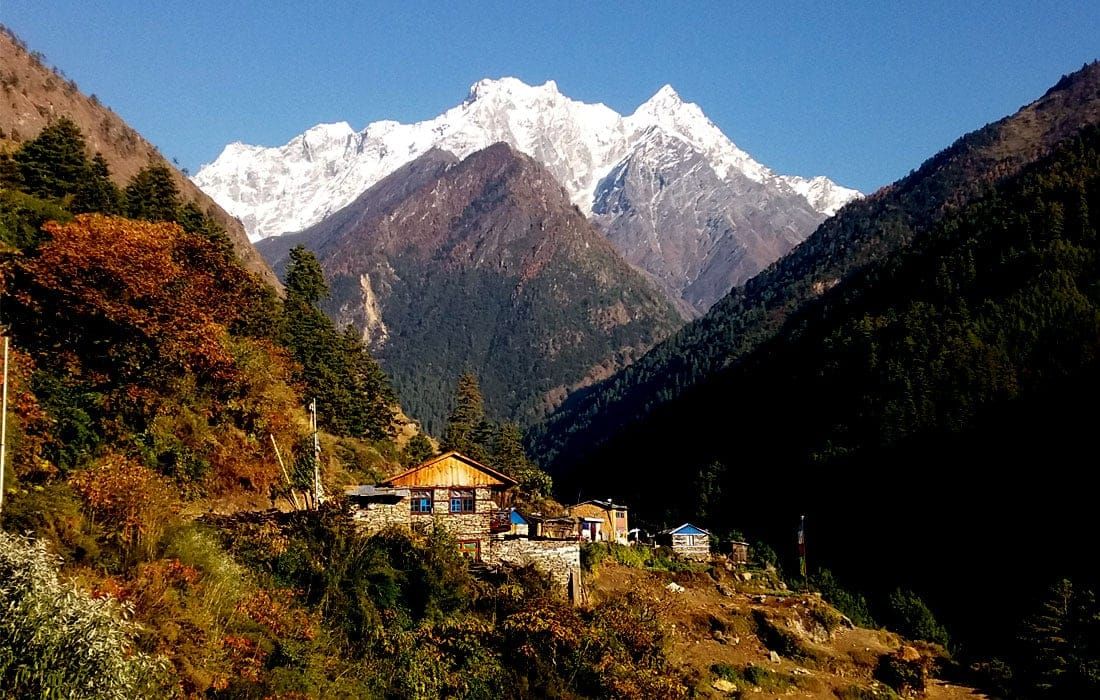
The experience: Chumling's first full Tsumba village: three gompas, stone lanes, potato fields.
Overnight and meals: Community lodge, Chumling.
Key risk / decision: One landslide-prone section — cross briskly per guide's call.
Fallback: Wait at Lokpa if the slope is running after rain.
Day 5Chumling → Chhokang Paro4–6 hours walking · approx. 3,010 m
Morning: Climb into the upper valley's open bowl.
Route and pace: Altitude-aware; big views arrive with thin air.
The experience: Ganesh Himal behind, Tsum's amphitheatre ahead — the valley's great reveal.
Overnight and meals: Lodge at Chhokang Paro.
Key risk / decision: Above 3,000 m now — monitor the group.
Fallback: Split at Gho if slow.
Day 6Chhokang Paro acclimatisation + Milarepa cave3–4 hours optional
Morning: Walk to Piren Phu (Milarepa's cave) with its shrines and valley views.
Route and pace: Gentle; altitude medicine disguised as pilgrimage.
The experience: The valley's sacred geography starts making sense.
Overnight and meals: Chhokang Paro again.
Key risk / decision: —
Fallback: Full rest if anyone is symptomatic.
Day 7Chhokang Paro → Nile/Chule4–5 hours walking · approx. 3,360 m
Morning: Through Lamagaon and the twin upper villages.
Route and pace: Easy gradient through barley and buckwheat.
The experience: Rachen Nunnery's great courtyard en route — visit respectfully, by invitation of its rhythm.
Overnight and meals: Lodge at Nile or Chule.
Key risk / decision: Cold nights begin in earnest.
Fallback: None needed.
Day 8Nile → Mu Gompa3–4 hours walking · approx. 3,700 m
Morning: The valley's last climb to its monastic head.
Route and pace: Short by design.
The experience: Mu Gompa's halls above the yak pastures, with trade-route history running north in the empty upper valley.
Overnight and meals: Monastery guesthouse or lodge below; follow the gompa's guest rules exactly.
Water: Limited sources; carry from Nile and treat.
Key risk / decision: Highest sleeping point; assess before committing to stay high.
Fallback: Sleep at Nile, day-trip Mu.
Day 9Upper valley exploration3–6 hours optional
Morning: Walk toward Bhajyo pastures or the ridge viewpoints — not toward the border, which is closed territory.
Route and pace: As altitude allows.
The experience: Trans-Himalayan emptiness an hour beyond the last village.
Overnight and meals: Mu area or Nile.
Key risk / decision: Do not approach the border zone; your permit does not cover it.
Fallback: A gompa day in bad weather is entirely in the spirit.
Day 10Mu/Nile → Chhokang Paro4–5 hours walking
Morning: Begin the return, downhill through the barley bowls.
Route and pace: Easy.
The experience: The valley reversed, with time for the villages you rushed.
Overnight and meals: Chhokang Paro.
Key risk / decision: —
Fallback: —
Day 11Chhokang Paro → Chumling4–6 hours walking
Morning: Down the gorge lip.
Route and pace: Steady.
The experience: Second passes at the gompas you missed.
Overnight and meals: Chumling.
Key risk / decision: Same slide section as day 4.
Fallback: Timing per guide.
Day 12Chumling → Lokpa → Philim6–7 hours walking · approx. 1,590 m
Morning: Exit the hidden valley and rejoin the Budhi Gandaki at Philim.
Route and pace: Long but descending.
The experience: Traffic, apples, and the wider world returning.
Overnight and meals: Lodge at Philim.
Key risk / decision: Tired-legs stage — poles out.
Fallback: Overnight Lokpa splits it.
Day 13Philim → Machha Khola6–7 hours walking
Morning: Corridor walking back past Jagat.
Route and pace: Steady; the gorge feels different southbound.
The experience: Tatopani hot springs earn their name today.
Overnight and meals: Machha Khola.
Key risk / decision: Mule traffic.
Fallback: Split at Jagat.
Day 14Machha Khola → Kathmandu8–10 hours road
Morning: The long jeep out.
Route and pace: —
The experience: Done — and the valley already improbable in memory.
Overnight and meals: Kathmandu.
Key risk / decision: Road delays.
Fallback: Days 15–16 buffer.
Day 15Contingency day 1—
Morning: Unassigned.
Route and pace: —
The experience: Weather, roads, or an extra gompa day.
Overnight and meals: —
Key risk / decision: —
Fallback: —
Day 16Contingency day 2—
Morning: Unassigned.
Route and pace: —
The experience: Second buffer.
Overnight and meals: —
Key risk / decision: —
Fallback: —
Weather through the year
| Season | Typical character | Trails, roads, lodges, flights | Think twice if |
|---|
| Mar–May | Spring blossom low, warming barley country high; snow lingering above Nile early season. | Lodges open through spring; road worst in late-spring storms. | Nobody in particular from April. |
| Jun–Aug | Monsoon hammers the approach gorge; upper Tsum sits drier in partial rain shadow. | The road and lower gorge are the problem — slides and slips; upper valley itself often walkable. | Most parties; access risk outweighs the upper valley's relative dryness. |
| Sep–Nov | Prime: stable, clear, harvest in the villages, cold nights above Nile. | Best conditions throughout. | Nobody. |
| Dec–Feb | Hard cold, snow above Chhokang Paro; many families winter downvalley — lodges thin out. | Passable low, sparse high; restricted permit still required. | All but cold-hardened parties with flexible plans. |
Seasonal patterns, not forecasts. Temperatures vary dramatically with altitude on the same day — pack by elevation range.
Things to do
- Mu Gompa and Rachen Nunnery
- Piren Phu (Milarepa's cave)
- Mani walls, chortens, and kani gateways at village thresholds
- Barley-and-buckwheat farm life in Chhokang Paro's bowl
- Ganesh Himal viewpoints
- The upper valley's trade-route emptiness
On the ground
Accommodation
Community lodges and homestays throughout — simple, warm-hearted, increasingly organised. Monastery guesthouse at Mu operates by its own rules; treat it as hospitality, not hotel.
Food and water
Lodge staples plus Tsumba touches — butter tea, tsampa if offered. Treat all water; upper-valley sources are cold and few.
Connectivity and power
Assume offline beyond Philim. Some solar/hydro charging low; little above Chhokang Paro. Guide carries the communication plan.
Cash and payments
Cash for the full trek from Kathmandu; nothing electronic exists upvalley.
Permits and guide requirements
| Requirement | Amount | Authority | Note |
|---|
| Tsum Valley Restricted Area Permit | Sep–Nov: USD 40/week; Dec–Aug: USD 30/week; then USD 7/day beyond a week (official baseline as of 14 July 2026 — recheck) | Department of Immigration via registered agency | Agency-issued; minimum party rules have historically applied. |
| Manaslu Conservation Area entry | Verify current NPR fee | MCAP / NTNC | The corridor and Tsum sit in the conservation area; arranged with the restricted permit. |
Guide requirement: Licensed guide via registered agency mandatory — restricted area, no independent option. Choose one who treats gompa protocol as seriously as trail safety.
What it costs
| Band | USD (per person) | NPR (approx.) | What it buys |
|---|
| Recommended guided | USD 1,500–2,100 | NPR 230,000–NPR 322,000 | Full agency service: permits, guide, porter, transfers, lodges. |
| Higher comfort / private | USD 2,100–2,600 | NPR 322,000–NPR 399,000 | Private jeeps, stronger staff ratios, slower custom pacing. |
Main cost drivers
- Restricted permit (seasonal rate)
- Conservation fee
- Guide and porter for two-plus weeks
- Long jeep transfers
Typically included
- Transfers
- Permits
- Guide and porter with insurance
- Lodges and trek meals
Not included
- International airfare, visa, insurance to 3,700 m+
- Kathmandu nights, tips, drinks
Contingency: 15% — road-corridor risk is the main variable. No budget-independent band exists: restricted area.
Planning ranges per adult, twin-share, for the recommended duration from the stated gateway — not quotes. NPR conversion uses the Nepal Rastra Bank selling rate of USD 1 = NPR 153.3 reviewed 31 August 2026, rounded to the nearest NPR 1,000; bank, card, and cash rates differ. Excludes international airfare, visa, insurance, tips, and personal spending unless stated.
Packing essentials for this route
- Sleeping bag comfort −10 °C
- Warm layers for gompa halls (colder inside than out)
- Water treatment
- Modest dress throughout — this is a monastic valley
- Torch for one-bulb lodges
- Small notes for monastery donations
Safety and contingency
- Ascend conservatively: once above 3,000 m, keep sleeping-elevation gains modest and build in acclimatisation days as scheduled.
- Learn the symptoms of acute mountain sickness before departure and agree turnaround rules with your guide — descent is the treatment.
- Helicopter evacuation depends on weather, daylight, and insurance; carry insurance that explicitly covers your maximum altitude and confirm the emergency process with your operator.
- Treat all drinking water; carry a filter or purification tablets rather than relying on bottled supply.
- The profile is gentle but sleeping at 3,700 m is still altitude — keep the acclimatisation day.
- Landslide sections near Chumling: cross on the guide's timing.
- The border zone beyond the upper pastures is off-limits — full stop.
If things change: Two days built in. Most likely spent on: the road corridor (either end), or weather at Mu. The honest abbreviation: turn at Chhokang Paro — the cultural core is already yours.
Accessibility
Not accessible to mobility-limited travellers: long rough road, then two weeks of trail with no vehicle access inside the valley.
Travelling responsibly here
- Tsum's shyagya tradition prohibits killing wildlife in the valley — honour it absolutely.
- Gompa etiquette: ask before entering, photograph only with explicit permission, donate discreetly.
- Dress modestly; public affection reads badly here.
- Buy local (potatoes, handicrafts, lodge services) and pack out all non-organics.
- Homestay rates are fixed — pay them cheerfully.
Booking checklist
- Registered agency with Tsum experience; permits 3–4 weeks ahead
- Verify seasonal permit rate band for your dates
- Confirm current roadhead
- Check winter lodge status if travelling Dec–Feb
- Insurance stated to cover 3,700 m
- Full cash; small notes for donations
Sources
Research draws on the following, alongside NepalPick’s editorial method. Last reviewed 14 July 2026; recheck official sources on the day you book.