Why NepalPick recommends it
Why Bardiya & Khata Corridor rewards curiosity
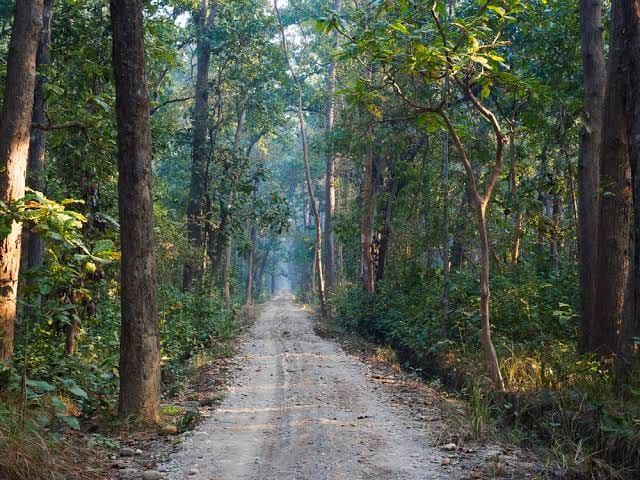
Track wildlife on foot and by jeep with local naturalists, then explore Tharu culture and community conservation around the Karnali landscape.
The journey offers space to notice how the landscape changes, eat what is seasonal, and let local knowledge shape the day. The point is not to collect sights. It is to understand why this place feels different from Nepal’s familiar routes.
Never pressure guides for close sightings, wildlife always has right of way.
Complete planning guide
Planning Bardiya & Khata Corridor: itinerary, logistics, weather, and costs
Research-based framework, last reviewed 14 July 2026. Operational details — roads, flights, lodges, permits, fees — change; items marked for verification must be reconfirmed before booking.
Recommended4 days4–5 days; 5 recommended when adding the Khata community stay properly
Start / endNepalgunj (fly) → Thakurdwara → Khata corridor → return
Trip stylewildlifeEveryone; walking safaris require steady nerves and obedience to guides, jeep days suit all.
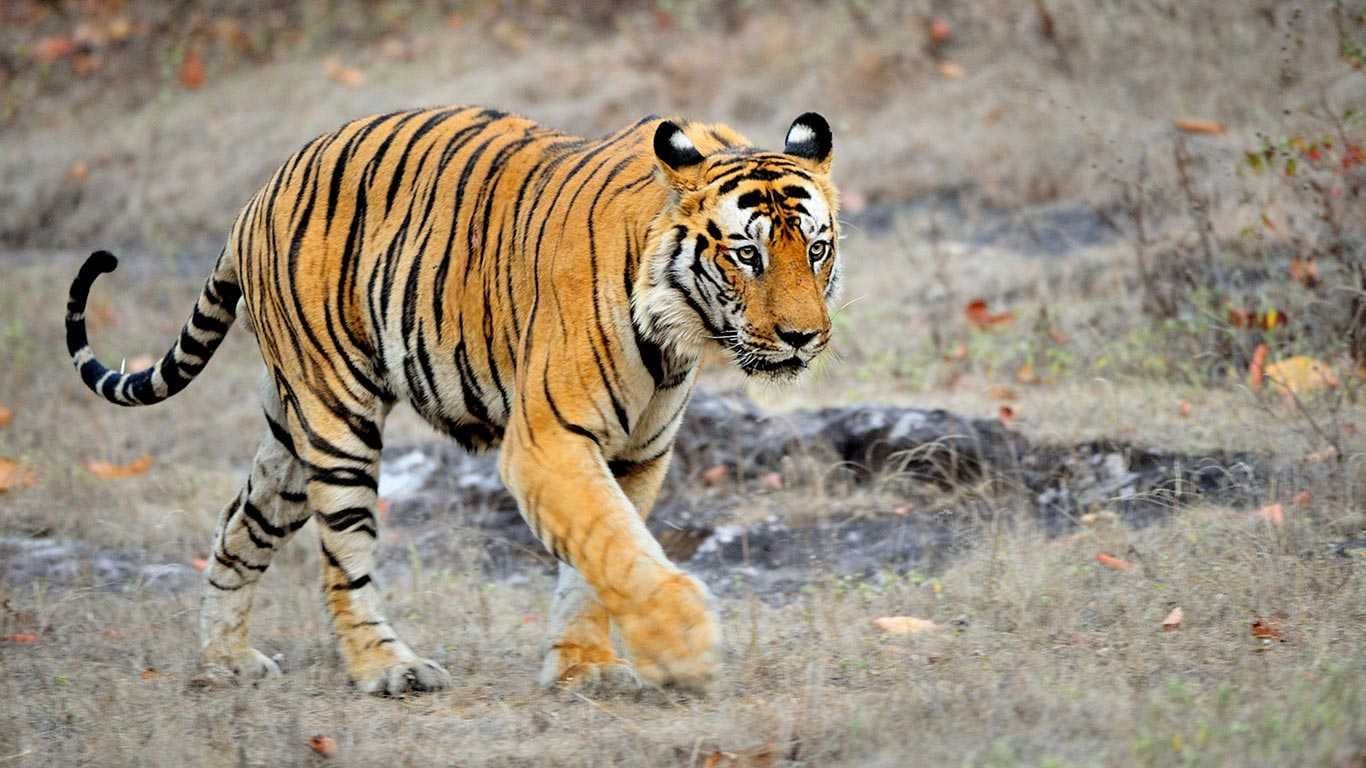
Nepal's finest tiger landscape done slowly: Bardiya National Park's sal forest and grasslands with genuinely skilled naturalists, then the Khata corridor's community forests — the connective tissue to India's Katarniaghat — where conservation is a village livelihood, not a fence.
Getting there: preferred and alternative routes
PreferredKathmandu → Nepalgunj (fly) → Thakurdwara
Flight plus 2–3 hours road
- Works because
- Same-day lodge arrival with an evening orientation
- Trade-off
- Flight cost
- Vulnerable to
- Monsoon and fog flight wobbles
- Book
- Flights 1–2 weeks; lodges arrange pickup
- Reconfirm locally
- Pickup and current park activity roster
AlternativeKathmandu/Pokhara → Bardiya by road
Road (day service) · 10–14 hours
- Works because
- Cheap; overnight options midway
- Trade-off
- A very long day
- Vulnerable to
- East–west highway roadworks
- Book
- Buses ahead
- Reconfirm locally
- Prefer arriving by daylight
No flight, road, bridge, or lodge on this page is promised to operate on a given day — that is Nepal, honestly stated. Build the margins this page recommends.
Day by day
Day 1Arrival → orientation + Tharu eveningTravel + 2–3 hours
Morning: Fly west, drive the Karnali plain to Thakurdwara.
Route and pace: Arrival ease; briefing with your naturalist sets the ethics and the plan.
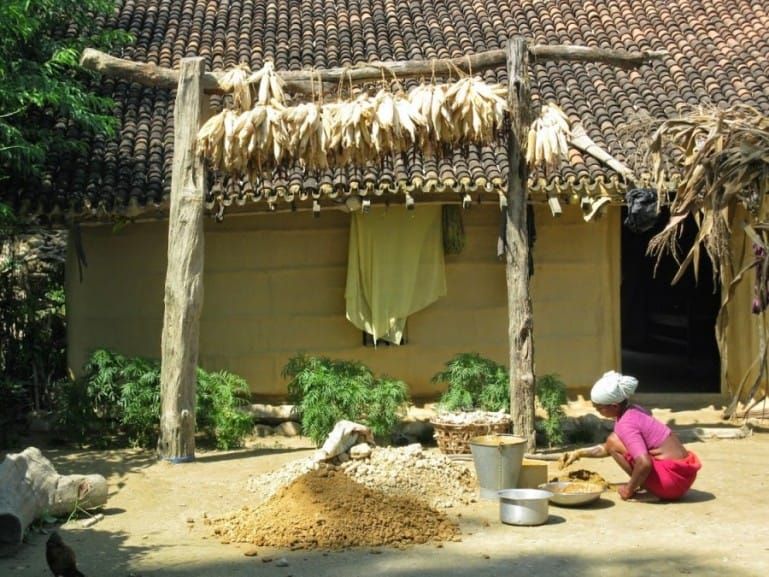
The experience: First peacock calls, Tharu architecture, and the park boundary's charged quiet.
Overnight and meals: Community-run lodge or established safari lodge, Thakurdwara; full board.
Key risk / decision: None significant.
Fallback: Road-day arrivals shift orientation to dawn.
Day 2Full-day park activity (walk and/or jeep)6–9 hours with rests
Morning: Dawn entry — the tiger hours. Walking safari with two guides where authorised, or jeep circuits to grasslands and river confluences.
Route and pace: Long, patient, silent stretches; heat rest at midday hide or riverbank.
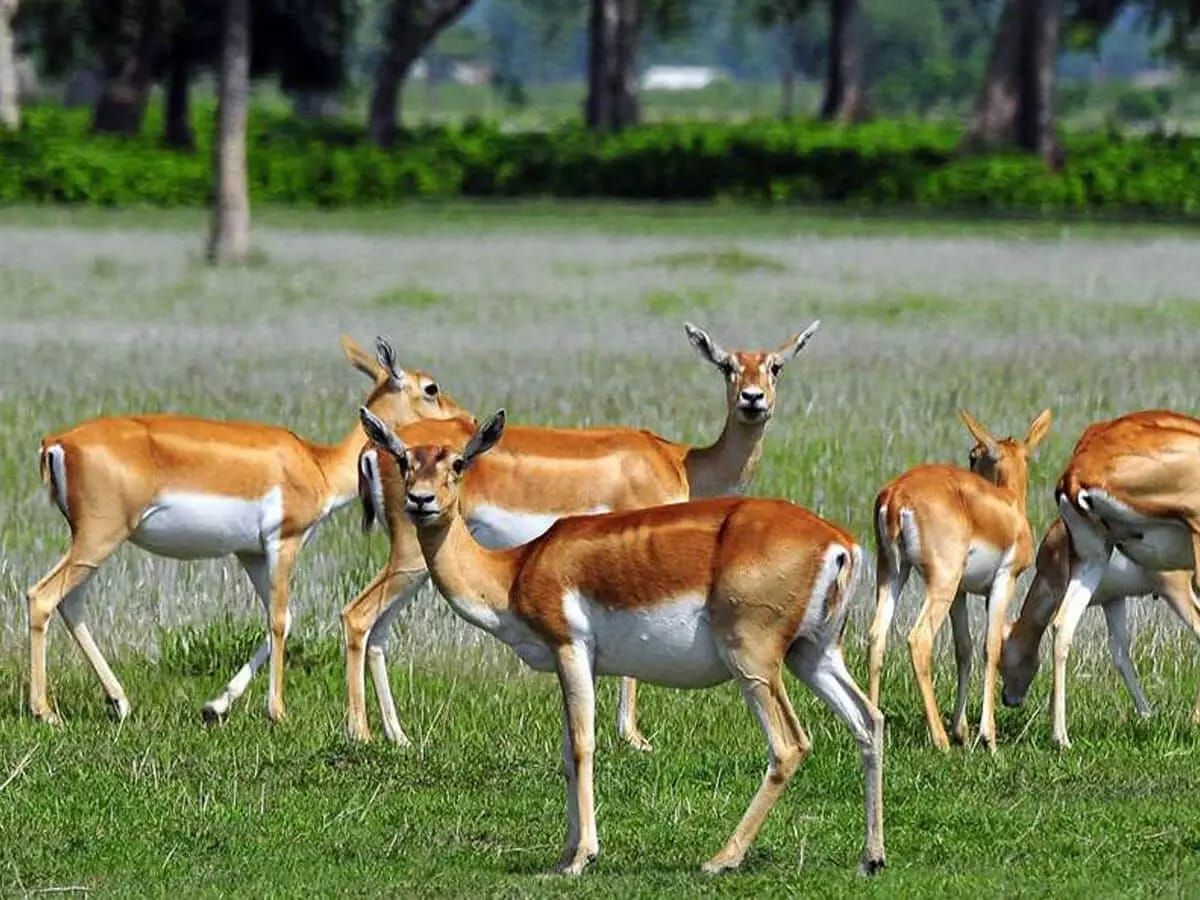
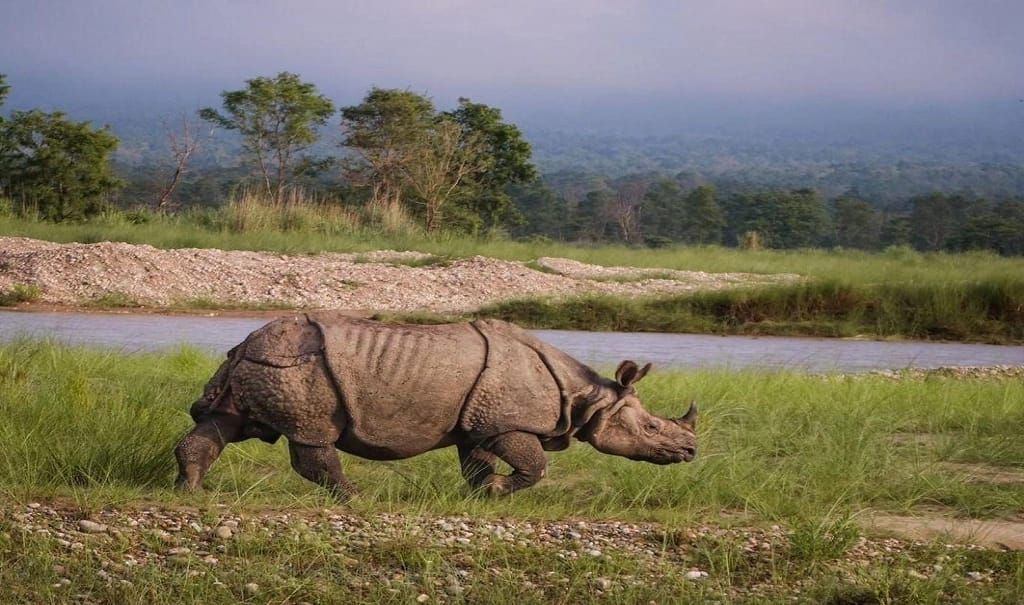
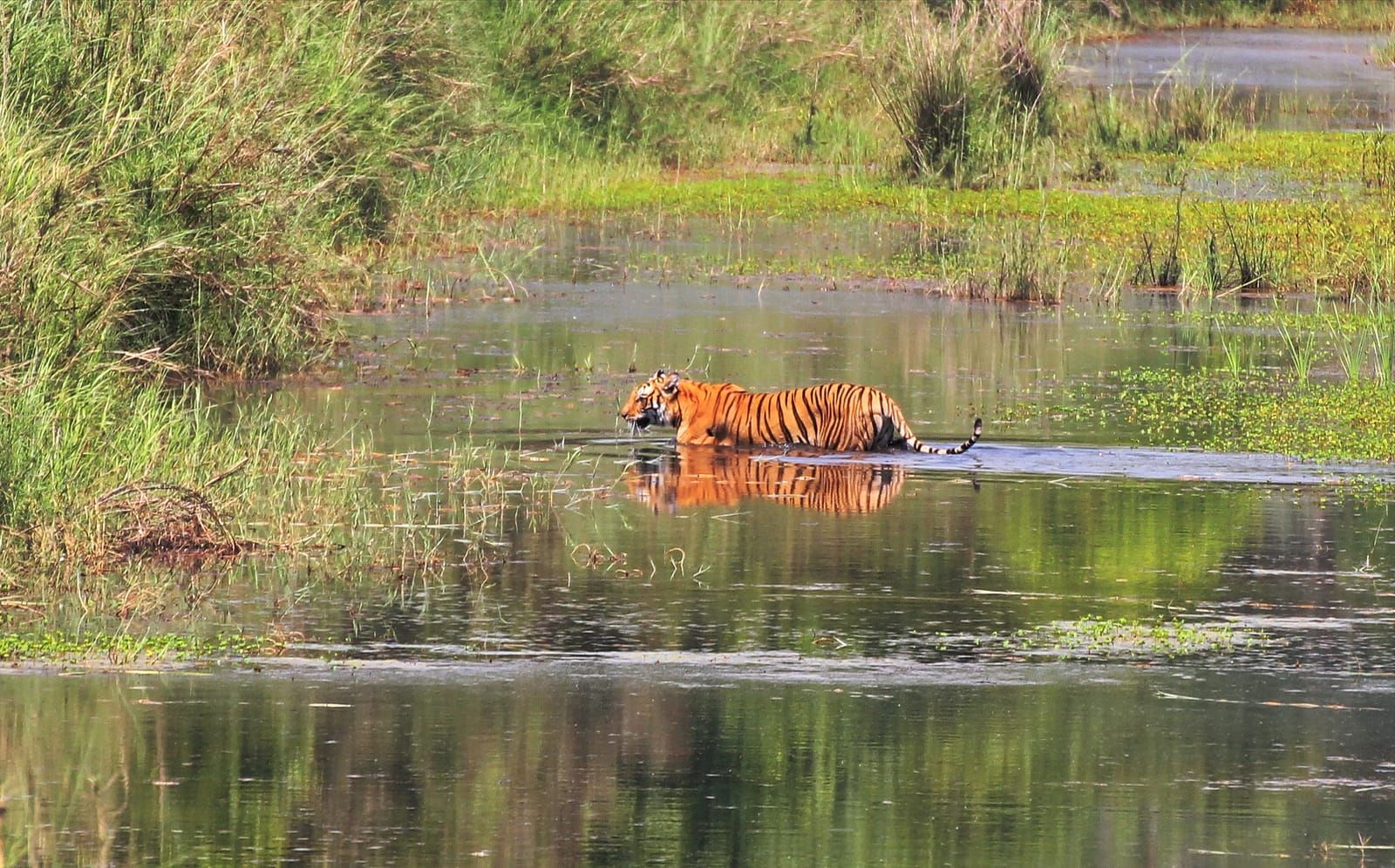
The experience: Tiger sign always, tigers sometimes, rhino, swamp deer, gharial on the Babai or Karnali channels — and the discipline of tracking rather than ticking.
Overnight and meals: Lodge; species list over dinner.
Water: Lodge-supplied; carry plenty.
Key risk / decision: Wildlife on foot is real risk managed by protocol — your guides' word is absolute.
Fallback: Jeep replaces foot in high grass season or per ranger advice.
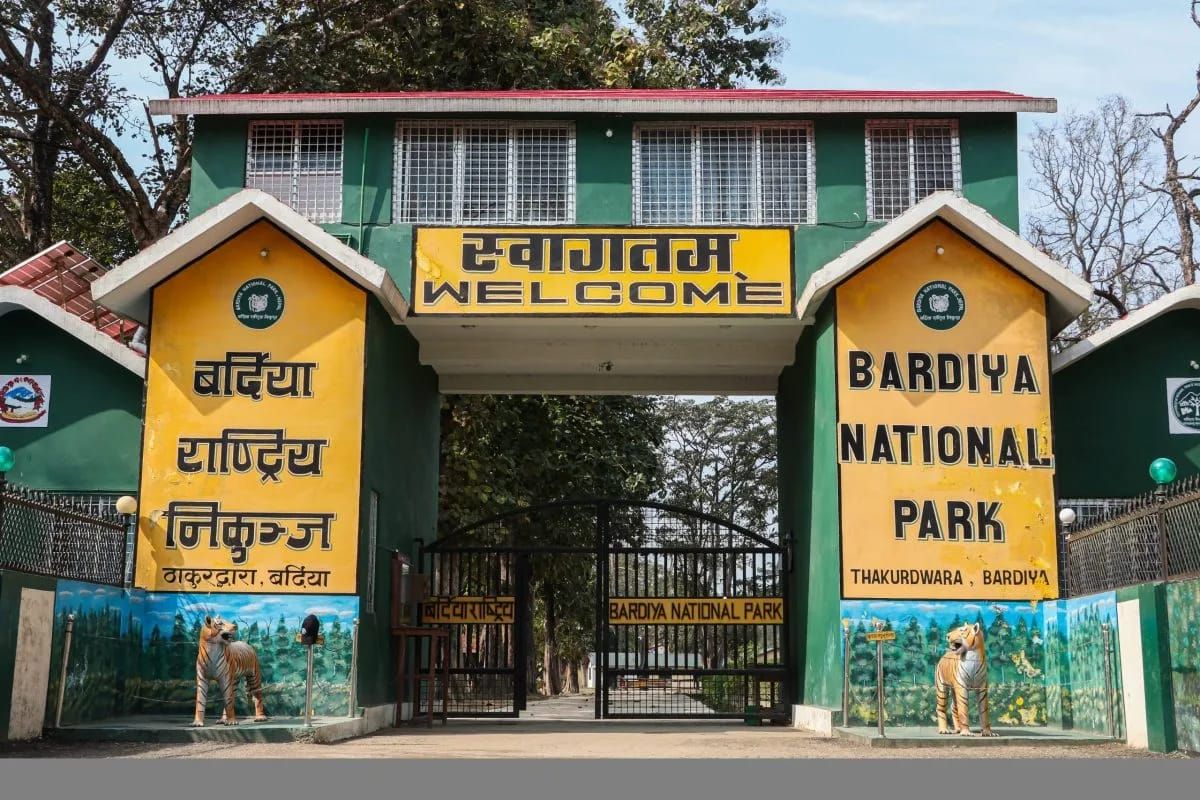
Day 3Second park block → Khata corridor community stay4–6 hours activity + 1–2 hours transfer
Morning: Dawn birding or river activity (seasonal, conditions-led), then transfer south into the corridor.
Route and pace: From park formality to village conservation rhythm.
The experience: Community forest walks, the corridor's camera-trap stories, Dalla or a comparable Tharu community homestay — dinner, dance if offered honestly, and conservation economics firsthand.
Overnight and meals: Community homestay, Khata.
Key risk / decision: Corridor wildlife moves at night — compound rules exist for reasons.
Fallback: Second lodge night at Thakurdwara if community capacity is full — book ahead to avoid this.
Day 4Corridor morning → departure2–3 hours + travel
Morning: Community forest dawn walk — the corridor's quieter species and its human stewards.
Route and pace: Gentle, then the road.
The experience: Conservation as livelihood, the collection's clearest example.
Overnight and meals: Fly or drive out via Nepalgunj.
Key risk / decision: Flight timing vs. morning activity — midday flights fit best.
Fallback: Drop the final walk for early flights.
Weather through the year
| Season | Typical character | Trails, roads, lodges, flights | Think twice if |
|---|
| Mar–May | Heat rising to serious (April–May 40 °C+); wildlife concentrates at water — sightings peak as comfort plummets. | All access good; activity times compress to dawn/dusk. | Heat-sensitive travellers after early April. |
| Jun–Aug | Monsoon: rivers rise, grass explodes, park activities contract or close. | Limited activity; flights wobble; leeches inland. | Everyone except monsoon-ecology specialists. |
| Sep–Nov | Post-monsoon: tall grass hides much early, cut lines improve through November; comfortable temperatures. | All reopens; October still grass-high. | Nobody — set sighting expectations honestly in early autumn. |
| Dec–Feb | Cool, dry, misty dawns; excellent walking weather; fog occasionally slows mornings. | Best all-round comfort; flights fog-delayed some mornings. | Nobody. |
Seasonal patterns, not forecasts. Temperatures vary dramatically with altitude on the same day — pack by elevation range.
Things to do
- Walking safari with licensed naturalists — Bardiya's signature
- Tiger, rhino, and elephant landscapes; gharial on the river channels
- 500-species birding across sal, grassland, and wetland
- Khata corridor community forests and camera-trap conservation
- Tharu homestay, food, and architecture
- Karnali river scenery
On the ground
Accommodation
Thakurdwara's range runs simple community lodges to comfortable safari lodges; Khata offers genuine community homestays. Book both ahead — capacity is village-scale.
Food and water
Lodge full board plus Tharu home cooking (ghonghi if you're game). Drink treated/lodge water only.
Connectivity and power
Reasonable coverage at Thakurdwara; patchier in the corridor. Lodge power with outages; charging fine.
Cash and payments
Cash for homestays, tips, crafts; nearest reliable ATMs Nepalgunj/Gulariya — arrive supplied.
Permits and guide requirements
| Requirement | Amount | Authority | Note |
|---|
| Bardiya National Park entry | Verify current NPR fee (charged per entry day) | DNPWC / park office | Lodges arrange with your passport; multiple activity days mean multiple entries — budget accordingly. |
| Community forest fees (Khata) | Small NPR amounts — verify locally | Community forest user groups | Paid into the community system; this is the model working. |
Guide requirement: Mandatory for all park activities: licensed naturalists, two per walking group by standard practice. In the corridor, community guides are both requirement and point.
What it costs
| Band | USD (per person) | NPR (approx.) | What it buys |
|---|
| Budget local-service | USD 350–550 | NPR 54,000–NPR 84,000 | Road access, community lodge, shared activities. |
| Recommended guided | USD 550–850 | NPR 84,000–NPR 130,000 | Flights, established lodge full-board, private activities, Khata stay. |
Main cost drivers
- Access mode
- Park fees per entry day
- Naturalist-led activities
- Lodge tier
Typically included
- Transport per band
- Full-board lodging
- Park fees and guided activities
- Community homestay night
Not included
- International airfare, visa, insurance
- Tips (naturalists earn them), drinks, crafts
Contingency: 10–15% — season shifts activities more than costs.
Planning ranges per adult, twin-share, for the recommended duration from the stated gateway — not quotes. NPR conversion uses the Nepal Rastra Bank selling rate of USD 1 = NPR 153.3 reviewed 14 July 2026, rounded to the nearest NPR 1,000; bank, card, and cash rates differ. Excludes international airfare, visa, insurance, tips, and personal spending unless stated.
Packing essentials for this route
- Neutral-toned clothing (bright colours cost sightings)
- Binoculars per person
- Sun kit and serious repellent
- Closed shoes for walking safaris
- Light fleece for winter dawns
Safety and contingency
- Sightings are never guaranteed; a good visit is measured by habitat understanding, not a species checklist.
- Animals always have right of way — keep generous distance, never pressure guides for close approaches, and follow park rules on foot activity.
- All park activities require an authorised, licensed guide.
- Walking-safari protocol is life-safety: silence, single file, instant compliance with guides.
- Heat management outside winter; mosquito discipline year-round (lowland Nepal — discuss prophylaxis with a travel-health professional).
- Rivers hold currents and crocodiles — swim nowhere.
If things change: Grass height and river levels reshape activities seasonally — trust the lodge's daily plan. Sightings are never owed; two full activity days is the honest minimum for fair odds.
Accessibility
Jeep-based visits make Bardiya workable for many limited-mobility travellers — discuss vehicle transfer specifics with lodges. Walking safaris and homestay compounds assume full mobility.
Travelling responsibly here
- Distance is the ethic: no pressure on guides for closeness, ever.
- Choose community-run lodges/activities where quality matches — the corridor exists because villages profit from living tigers.
- Cultural performances only as genuinely offered; Tharu homes are homes.
- No single-use plastic into the park; pack out everything.
Booking checklist
- Book lodge + naturalist ahead; specify walking-safari interest
- Pre-book the Khata homestay night
- Match season to expectations (heat vs. grass vs. comfort)
- Carry passport for park entry
- Cash from Nepalgunj
- Midday-or-later departure flight
Sources
Research draws on the following, alongside NepalPick’s editorial method. Last reviewed 14 July 2026; recheck official sources on the day you book.